Skip to main content Skip to footer

In this edition of our Amtelco history spotlight series, we discover that Amtelco’s earliest beginnings stemmed from a car breaking down in Chicago, IL.
Early interest in Communication Technology
At this point, Bill and Eleanor were married, living in Madison, Wisconsin, and had recently welcomed their first baby. Eleanor was planning to visit her family in Michigan. Unfortunately, Bill would miss out on the visit because he was too busy with his construction business to accompany his young family to Michigan.
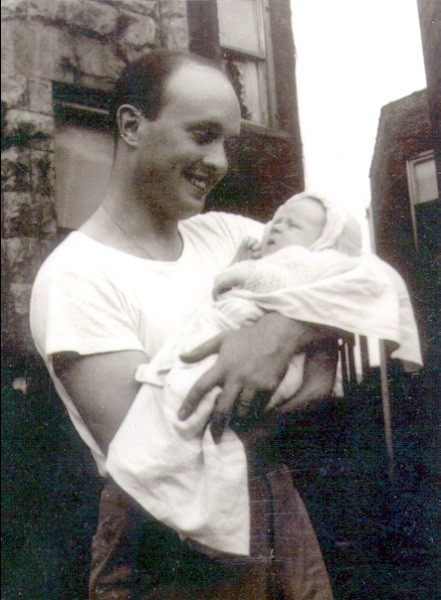
Bill Curtin and baby.
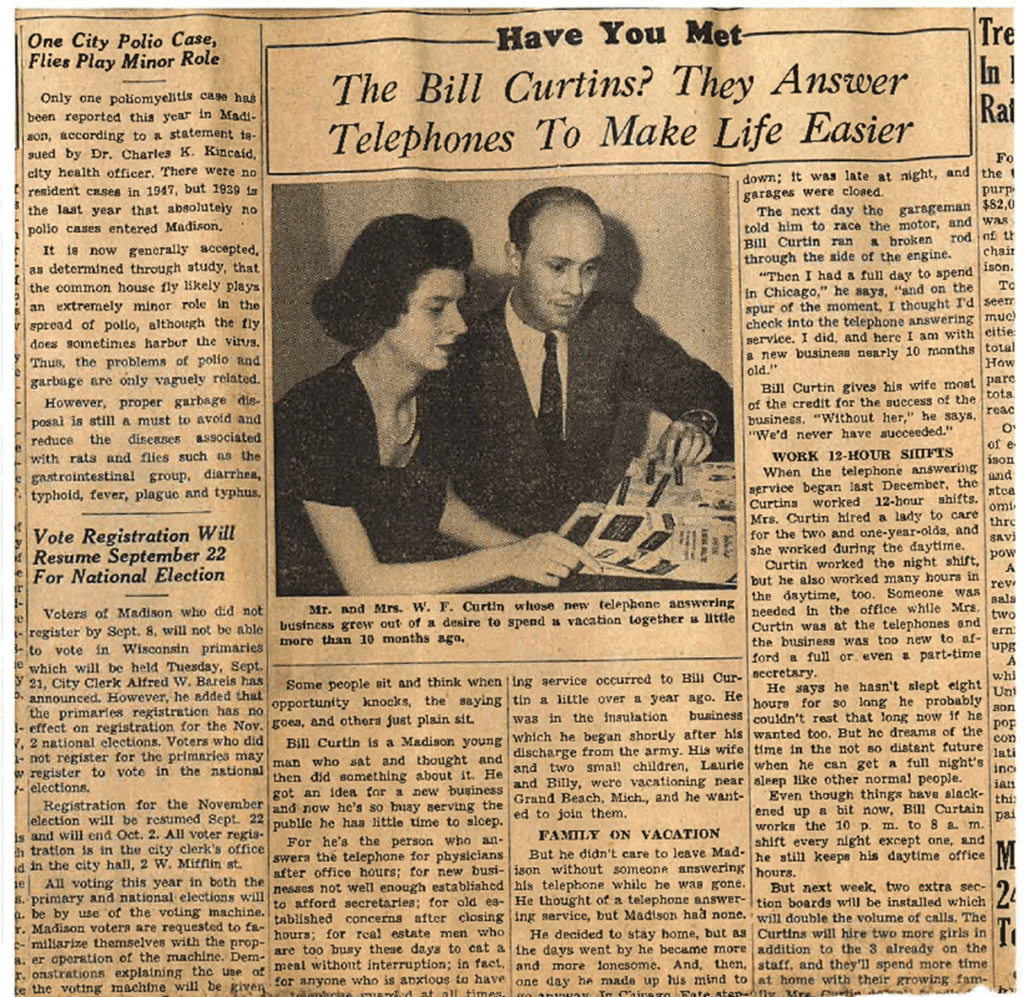
However, Bill’s workload cleared up that week, and he planned to drive to Michigan to surprise the family. On the way to Michigan, Bill’s car broke down in Chicago. Bill couldn’t go to Michigan for the weekend, and the surprise would be ruined.
Communication options and message-taking were lacking during this time period. If no one was home to answer a phone call, communication didn’t happen. Bill was unable to contact Eleanor in Michigan, and he knew at some point Eleanor would be calling home to Madison before he had a chance to get back.
Bill didn’t want Eleanor to worry when the phone wasn’t answered at home. So, he called the phone operator in Madison and asked if she could answer the inevitable phone call from Eleanor that would be coming to his home phone. He said, “Can you please let my wife know that I was planning to surprise her in Michigan but had car troubles and got stuck in Chicago?” The operator responded, “I can’t do that!” Bill, with his technical background in communications, explained how there was a way she could answer his phone. The operator replied, “That is not possible, and that is not a part of my job responsibilities.”
Later, after some research, Bill learned about a type of business called “Answering Services” that answered phones for others. At that time, only a handful of companies in the United States offered these services. Bill visited at least one of these Answering Services to see how they were configured to answer phone calls. He realized he could do the same thing in Madison and started planning his next business venture.
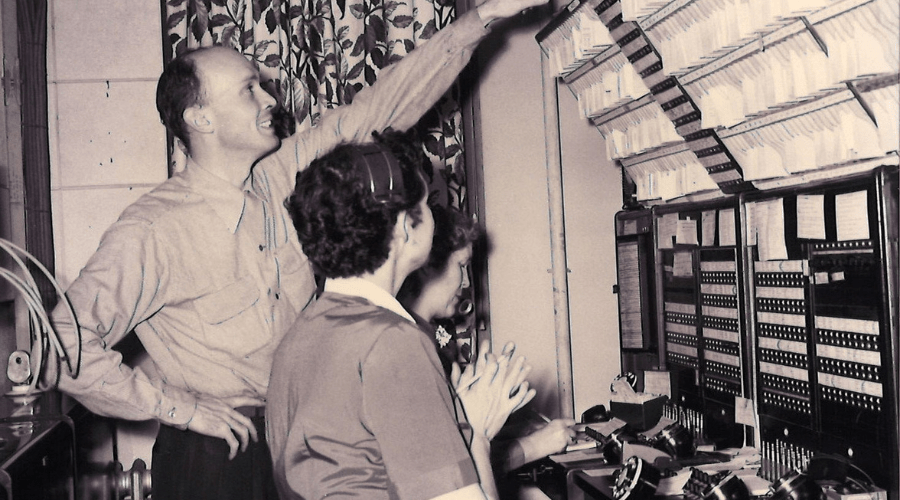
Bill and Eleanor started an answering service in Madison, Wisconsin. Together, they worked tirelessly to start their business. Eleanor was a trend-setting office manager who, in addition to being a wife and mother, worked outside the home in an era where it was much more common for women to be stay-at-home moms and housewives.
Bill thought of inventions to address the limitations of communication technology while working the overnight shift. Those inventions would eventually become the foundation of Amtelco.
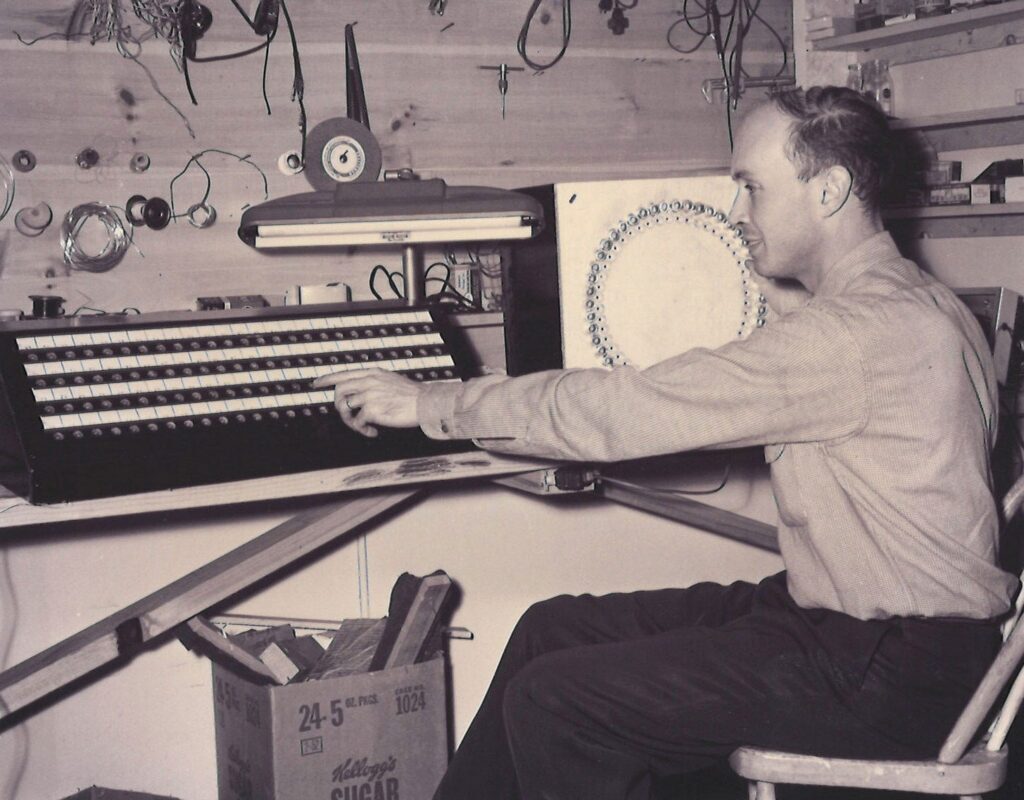
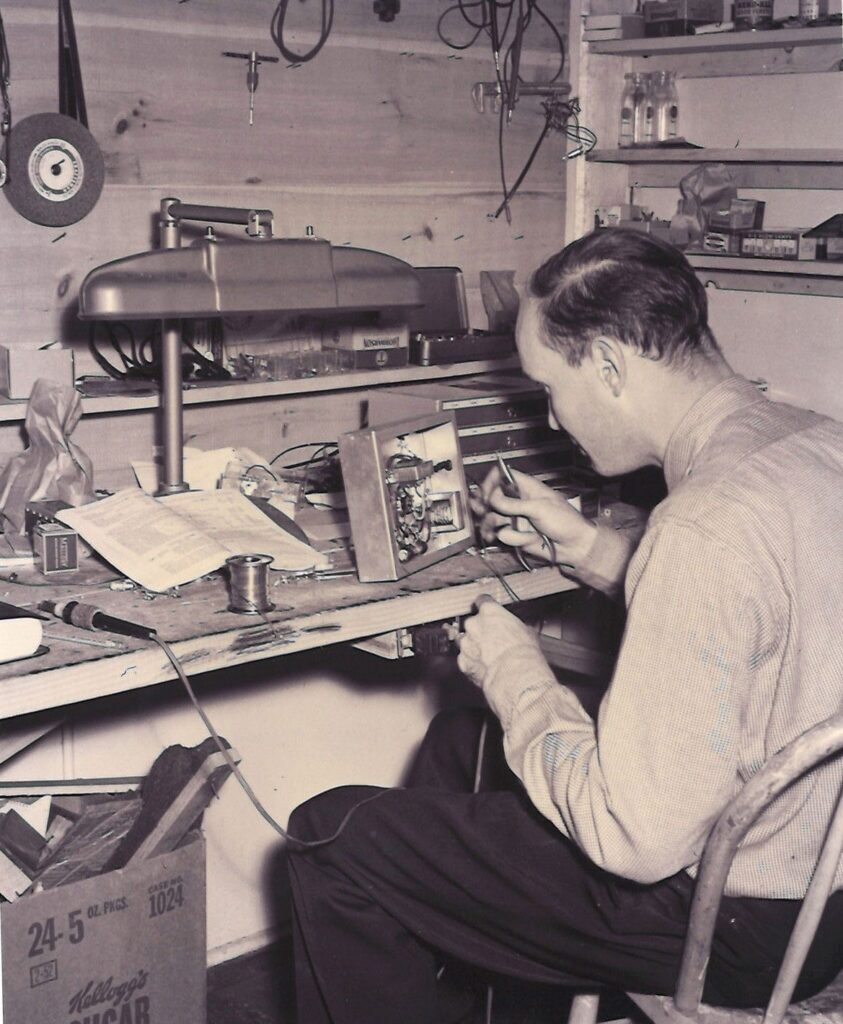
Bill Curtin (Mr. C) works on inventions.
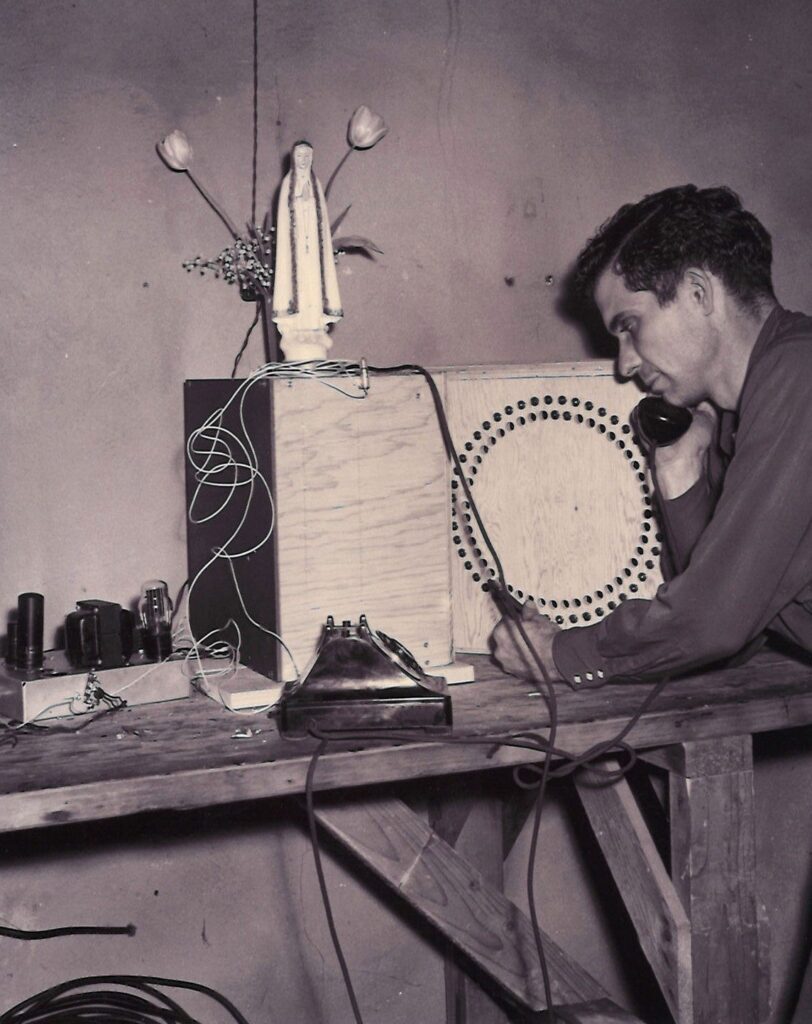
Curtin family friend Ham Reneau worked on Telesignal, which was eventually installed at his answering service in Rockford, IL.
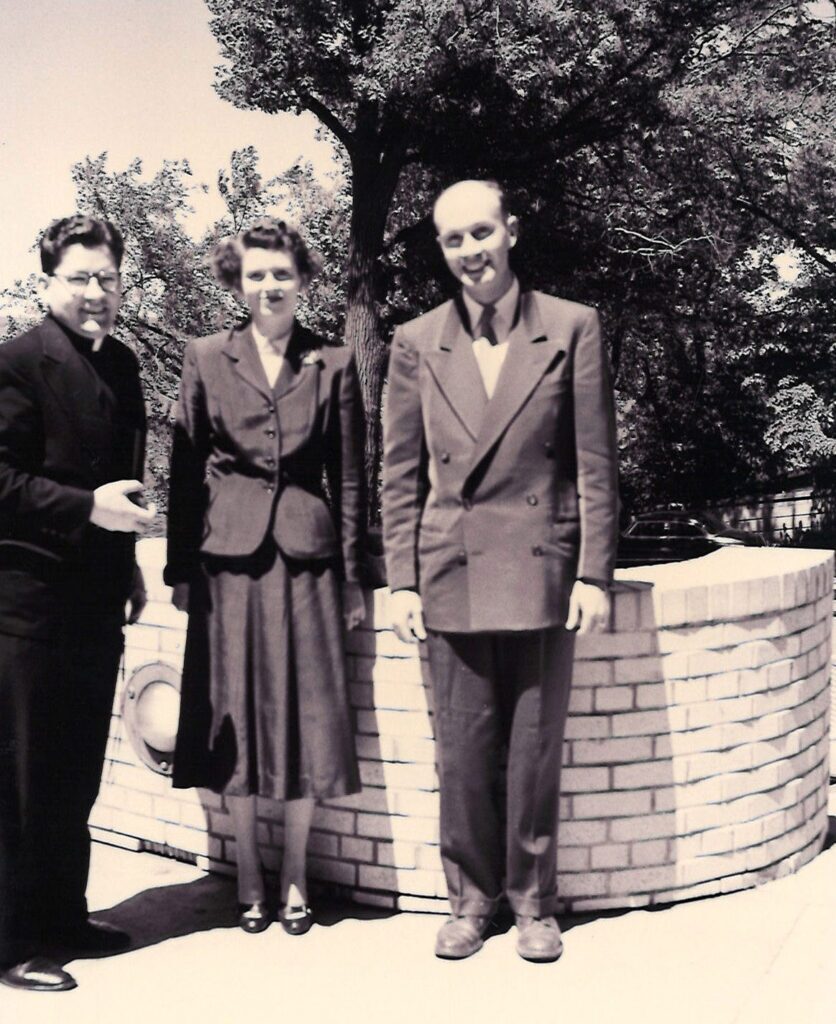
Mr. and Mrs. C with family friend Fr. Christopher Fuller who worked with Mr. C on patent research.
Amtelco was founded in 1976 in the wake of the 1968 Federal Communications Commission’s ruling in the Carterfone case, which struck down existing tariffs prohibiting the connection of equipment not supplied by telephone operating companies to the public telephone network. The FCC ruling eventually led to the breakup of AT&T’s telecommunications monopoly.
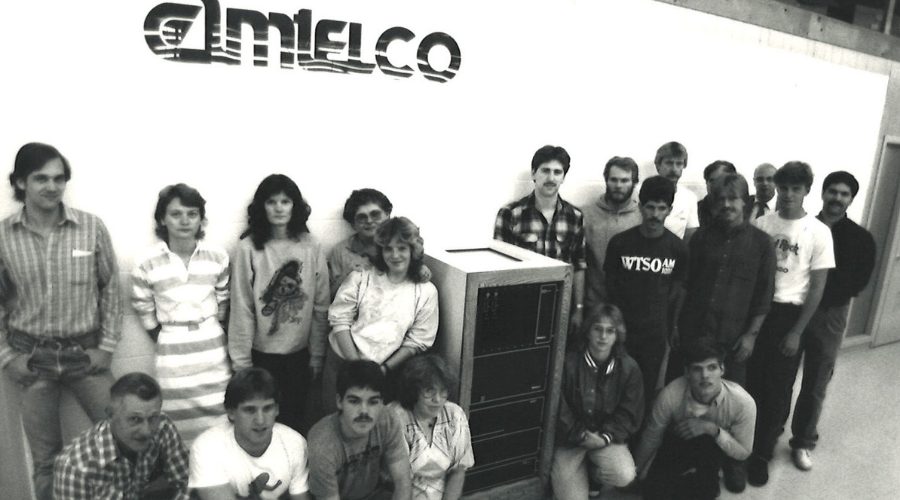
As Eleanor and Bill’s family grew, so did their company. Amtelco quickly became a trusted name in the teleservices industry after the release of its TAS (Telephone Answering Service) Video system, the first computerized telephone switching system in the marketplace. The EVE system soon succeeded the TAS Video system. By the late 1980s, Amtelco’s EVE (Electronic Video Exchange) system had grown to become the industry’s most widely used business telephone answering equipment.
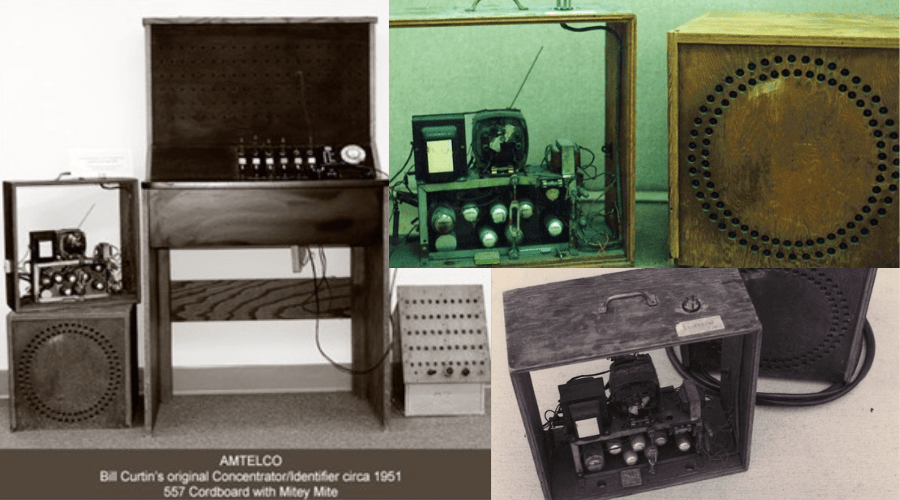
Concentrator/Identifier built with dresser drawers.
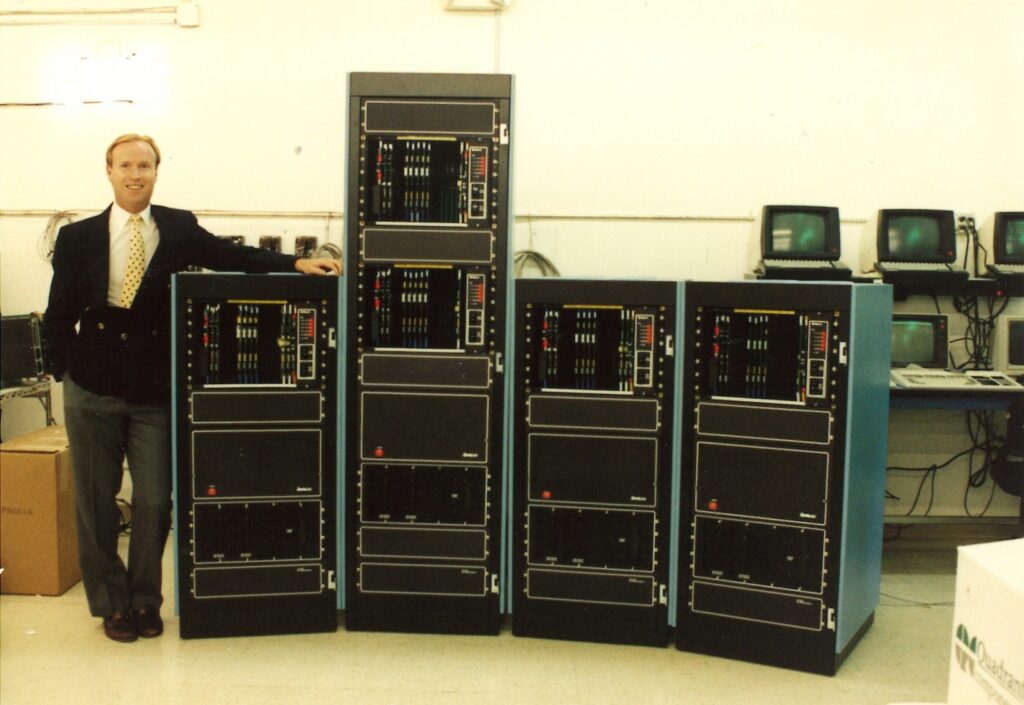
Tom Curtin with EVE system shipping to Thailand.
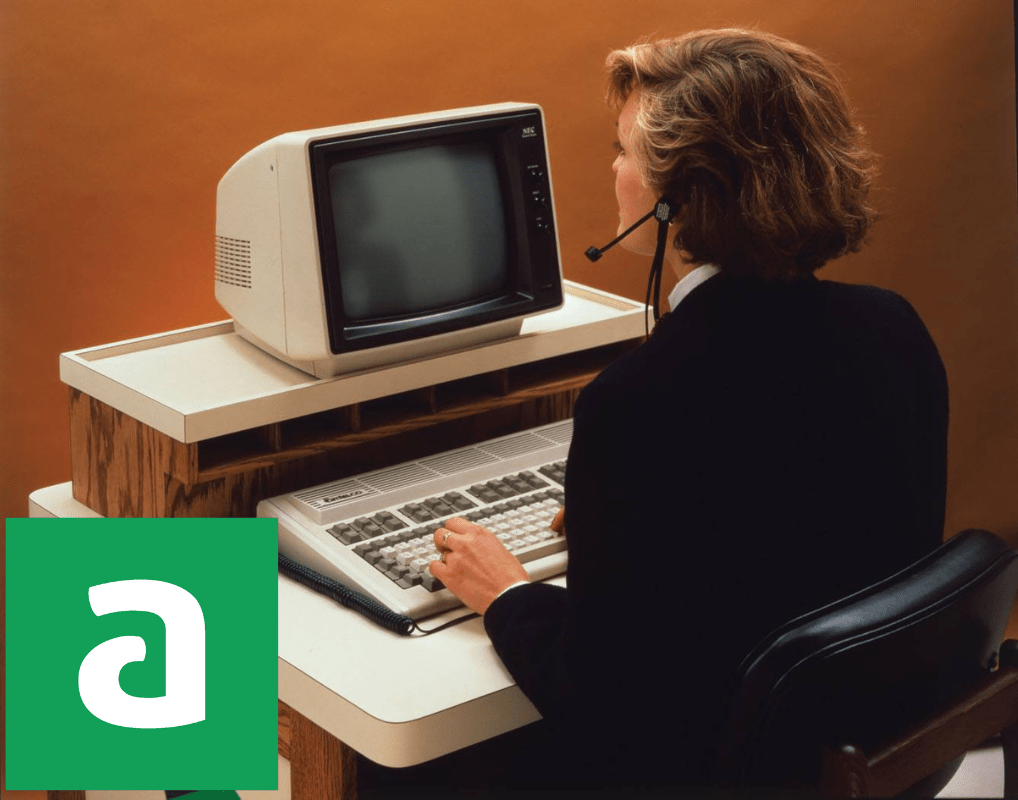
Amtelco’s EVE (Electronic Video Exchange) system in 1990.