Skip to main content Skip to footer

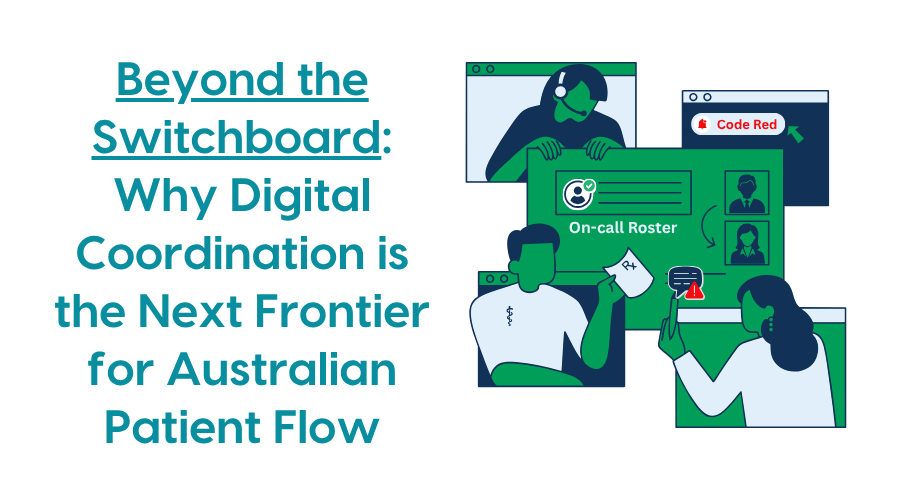
The traditional hospital switchboard, once a peripheral department managing manual dispatches and paper directories, is being redefined. In alignment with the Australian Digital Health Agency’s vision for a connected healthcare ecosystem, these units are evolving into Digital Coordination Centres (DCCs). This shift represents a transition from spreadsheet-based reactive processes to centralised hubs for real-time operational control and patient management.

The primary driver for digitalisation is the enhancement of the patient experience. By moving away from manual paper processes, a DCC employs structured protocols and AI-assisted tools to ensure call handlers identify critical needs immediately. When communication systems are integrated with the electronic health record (EHR), clinicians and agents gain an instantaneous single source of truth. This removes the “repeat your story” burden from patients and eliminates the clinical risks associated with transcription errors between paper and digital systems.
Furthermore, the DCC transforms from a reactive switchboard into a proactive care coordinator, automating SMS reminders for chronic disease check-ups and post-discharge follow-ups—critical steps in reducing avoidable readmissions.

The core value of a digital hub lies in its ability to dissolve information silos. Unlike manual spreadsheets, which offer only a delayed “rear-view mirror” perspective, digital dashboards provide system-wide situational awareness. Hospital leadership can monitor real-time bed occupancy, ambulance arrivals, and staff availability simultaneously. When a high-acuity transfer is logged, the DCC triggers instantaneous notifications to bed managers and receiving units, bypassing the phone tag that frequently delays patient throughput. By unifying phone, chat, and patient portals into a single stream, the DCC ensures that every interaction is logged and visible, fostering a cohesive environment where the entire facility functions as a singular unit.
Digitalisation addresses the administrative friction that often leads to staff burnout in the Australian public health system. By automating high-volume tasks—such as appointment scheduling and insurance verification, the DCC liberates staff to focus on complex, high-touch patient interactions. Digital referrals and specialist consults replace faxes and emails, with the system tracking each task to completion to ensure no request falls through the cracks. This seamless hand-off capability allows nurses and doctors to spend less time on coordination and more time at the bedside, directly supporting workforce retention and clinical satisfaction.

Beyond immediate operational gains, the DCC provides the structured data necessary for long-term strategic planning. By analysing historical trends and KPI metrics like Average Speed to Answer (ASA), hospitals can deploy predictive models to forecast demand spikes during flu seasons or holiday periods. This enables proactive adjustments to staffing and bed capacity before a bottleneck occurs.
The question of affordability is increasingly answered by the necessity of the investment. While the return is often realised over the medium term, the DCC directly mitigates some of the most expensive challenges in the Australian healthcare system: bed block and ambulance ramping. By improving patient flow, hospitals can reduce the significant costs associated with ED delays.

The economic case is further bolstered by programs like Queensland’s MeCare, which demonstrated a median net saving of $982 per participant month through reduced ED presentations. Additionally, the DCC provides the essential infrastructure for “Hospital-in-the-Home” and virtual care models. With KPMG estimating that virtual hospitals could save up to $1 billion in annual operating costs by 2030, the transition to a digital hub is no longer an optional upgrade. It is a strategic imperative for any Australian healthcare provider aiming to deliver high-quality, sustainable care in a digital-first era.
For too long, the hospital switchboard has been viewed as a manual utility—a labyrinth of paper directories and spreadsheets. But as Australian healthcare faces unprecedented pressure from ambulance ramping and bed block, this model is becoming a clinical risk. The evolution from a traditional switchboard to a DCC isn’t just a tech upgrade; it’s a strategic necessity.
Contact Nick Evans at +61 2 5017 9925 or nevans@amtelco.com to discuss the challenges your switchboard is facing with transitioning from paper processes to digital workflows.