Skip to main content
Skip to footer
Skip to main content
Skip to footer



Australian hospital switchboards are evolving into Digital Coordination Centres (DCCs), in alignment with the Australian Digital Health Agency’s vision for a centralised hub. In practice, switchboards are transitioning from paper, spreadsheet-based processes to integrated digital software. However, software is only as good as the people behind the console. Sometimes, hospital leadership only sees a switchboard’s paper process as a bottleneck, without realizing that the paper was just a placeholder for a massive, unwritten database stored in the operators’ heads.
Years of human experience that know which ward clerk is most helpful on a Tuesday morning, which doctors prefer certain communication channels, and how to “read between the lines” of a frantic call from a patient’s loved one.
Moving from the tactile reliability of paper logs to a digital platform is a significant cultural shift for any hospital switchboard. For veteran operators, those paper processes aren’t just habits; they represent years, even decades, of institutional knowledge and a proven way to keep patients safe.
This eBook offers leadership some insight into switchboards that they can use when introducing a DCC. It’s beneficial for leadership to shift the conversation away from the software’s technical specifications toward empathy, empowerment, and the personal benefits for the staff who will use it every day. A DCC is nothing without the human operating system.
The “Silent Database” in the Operator’s Head
The most dangerous misconception in digital transformation is that the software brings intelligence. In reality, a DCC is an empty vessel until it is filled with the institutional knowledge the switchboard has carried for years.
Your veteran switchboard staff possess a mental map of your hospital system’s social and operational nuances, the kind of “soft data” that isn’t programmed into software. Successful digitization isn’t about replacing that knowledge; it’s about finally giving it a platform where it can be scaled and protected.
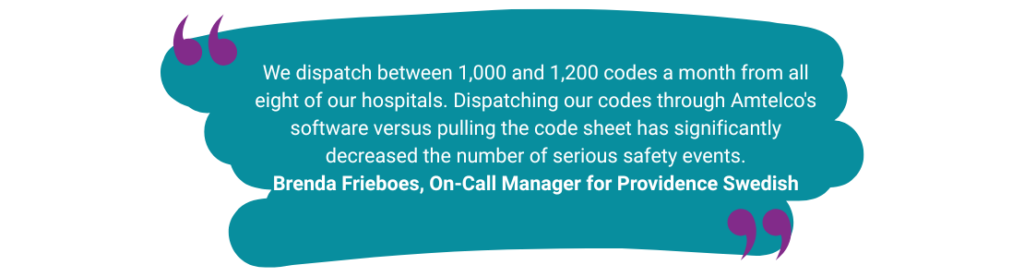
When you mention efficiency and automation to an operator with twenty years of experience, they hear, “We don’t realize how much you do and that much of this hospital’s workflow and patient flow processes live in your head.”
It really is a classic communication gap. Leadership is looking at patient safety, as well as ROI (Return on Investment) and data accuracy. The switchboard is looking at the relationships they’ve spent a career refining and protecting. By framing the operator as the “Architect of Workflow,” you turn the digital platform into a tribute to their knowledge rather than a replacement for it.
Turning Intuition into Infrastructure
For years, your hospital has relied on the switchboard who simply knew how to get things done through sheer memory and personal relationships. When these experts transition to a DCC, they aren’t just learning to click buttons; they are the ones who can tell the developers, “The system says this bed is ready, but I know that ward always needs an extra twenty minutes for cleaning on shift changes.” By merging their intuition with digital speed, the hospital gains a level of precision that neither a computer nor a person could achieve alone.
The first step in a successful transition is reframing the change as an upgrade to existing expertise rather than a replacement of it. It is vital to reassure operators that their deep understanding of hospital units and staff contacts remains the DCC’s most valuable asset. The digital system should be presented as a sophisticated tool—much like a calculator is to a mathematician—that handles the “paper-shuffling” so the switchboard can focus on higher-level coordination and real-time information to proactively prevent bottlenecks before they impact the hospital.
Bridging the Gap for Leadership
It’s important for leadership to recognize that when the switchboard is hesitant to move to digital, it’s often because they are protective of the unwritten processes and rules that have maintained patient safety for years. Acknowledging that a DCC’s success is 10 percent software and 90 percent human expertise changes the power dynamic. It turns the switchboard from “trainees” into “subject matter experts” who are essential to the system’s configuration.
To manage the fear of the unknown, the transition must include planning with input from the switchboard, so they know that, beyond hospital efficiency, the DCC is designed to reduce their personal stress by eliminating frustrations and enabling them to better help callers. This shifts the narrative from the switchboard needing the system to the system—and the hospital—needing the switchboard’s guidance.
Training should be role-specific and gradual, focusing only on daily essentials first to avoid overwhelm. Providing a test system where staff can experiment and even make mistakes without risking patient safety builds confidence. Furthermore, identifying tech-comfortable super users among their own peers provides a relatable first line of support.
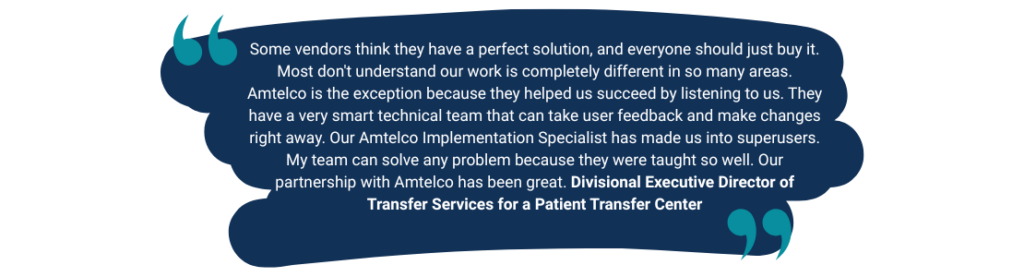
Finally, the rollout itself should ideally be gradual and reinforced by constant feedback. Implementing a dual-system period allows the switchboard to use the digital platform while keeping their familiar paper logs as a safety net until they trust the new data.
Starting with a single, simple function provides early “wins” that can be celebrated publicly, giving credit to the switchboard for the system’s success. By committing to regular check-ins and actually implementing staff suggestions, such as tweaking a dashboard layout, you demonstrate that the system is a living tool shaped by their expertise, ultimately making the digital transition feel like a shared victory.
The Vendor as a Strategic Change Partner
Australian health systems aren’t alone during the switch to DCCs. Software vendors play a critical role that goes far beyond simply delivering a product; they must act as a strategic partner throughout the transition. This means providing hospital-centric software specifically built for clinical environments, rather than standard enterprise software pigeonholed into a complex medical setting. It is unacceptable for a hospital to change its vital operational processes to match a vendor’s rigid software that may have been developed for general business rather than acute care.
Furthermore, a vendor’s software ownership model matters deeply; unlike traditional Software-as-a-Service (SaaS) where a hospital loses all access the moment a subscription stops, a perpetual license model like the one provided by Amtelco, ensures the hospital maintains ownership of the software itself—only losing access to ongoing support if payments cease.
A dedicated vendor directly addresses technological, staff, and organizational hurdles through thoughtful product design and a collaborative implementation strategy. This partnership ensures that the shift from paper to digital is not just a software installation, but a successful evolution of the hospital’s operational culture.
To solve the tech challenges of system integration and data quality, the vendor provides a foundation of interoperability. By building software with modern APIs that support Australian standards like HL7 FHIR, they ensure the DCC can “talk” to existing EMRs, labs, and patient administration systems.
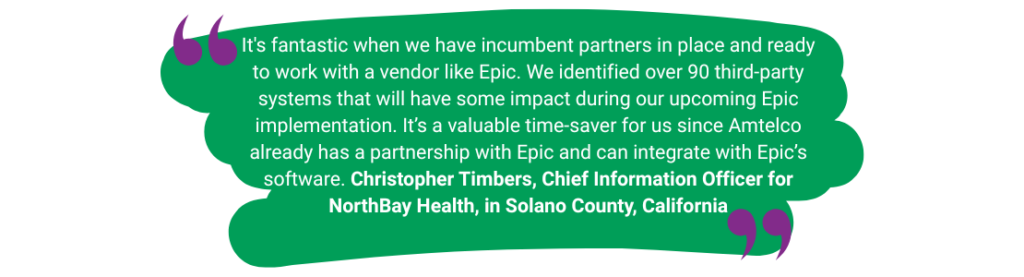
Crucially, a strategic partner ensures that the upgrade process is entirely dictated by the hospital. While most standard SaaS vendors push out automatic software upgrades every six months—which quite often breaks critical integrations with legacy hospital systems—a tailored healthcare solution protects these delicate data bridges. Rather than a disruptive rip-and-replace of legacy systems or forced vendor timelines, a strategic vendor offers a digital bridge strategy, enabling a phased rollout that pulls essential data from older infrastructure while the hospital modernizes at its own pace.
Addressing staff resistance requires a vendor to focus on transparency and co-design. Fear of surveillance is mitigated by designing systems with role-based access and framing automation as an “AI co-pilot” intended to stress rather than monitor performance. By engaging with frontline staff, vendors ensure the software interface actually supports real-world workflows rather than complicating them.
To bridge digital literacy gaps, the vendor provides tiered, role-specific training and on-site “super-user” programs, ensuring that operators, bed managers, and clinicians alike feel supported by hands-on experts and easy-to-access digital resources.
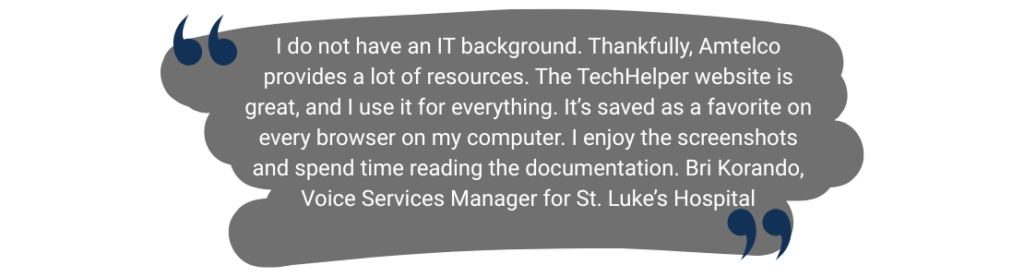
Finally, the vendor acts as a bridge to leadership and clinical governance. Experienced vendor staff can speak the same language as nursing and medical leaders, fostering early clinical engagement. They also help the hospital define and track clear success metrics, such as reduced critical notification times or improved bed occupancy, via live analytics dashboards.
In a healthcare environment, the most powerful motivator for change is often the positive impact on patient care. Digital systems provide a safety net that paper simply cannot accomplish. Validate your switchboard’s years of experience while acknowledging that new technology requires their talent to function properly. It moves the conversation from “the tech is replacing you” to “the tech needs you to drive it.”
4-Phase Plan for Digital Coordination Centre Implementation
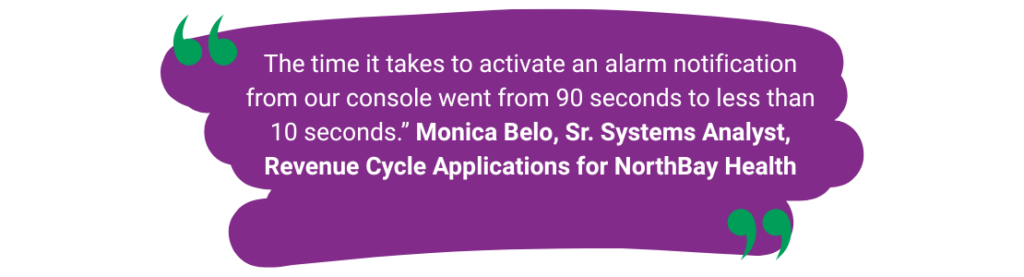
Transitioning from a switchboard to a DCC is a complex organizational and technical undertaking that requires a phased project management approach combined with an intensive, people-centric change management strategy. Below is an example of a comprehensive 4-phase plan to get you started.
Phase 1: Assess and Prepare the Foundation (The “Why”)
This phase establishes the compelling reasons for change and secures staff buy-in.
Current State Process Mapping
Map the pain points of the existing paper/manual process, and quantify any inefficiencies, such as average time to find an on-call doctor, or average time to send a code call.
Define the Digital Vision & Scope
Clearly define what a DCC will solve. Focus on patient flow, reducing ED wait times, and preventing bottlenecks. The new system should first handle the most stressful, high-volume tasks.
Identify and Engage Stakeholders
Create a multidisciplinary project team: Switchboard (Crucial!), IT, Clinical Leaders (ED/ICU/Nursing), Administration, and Finance. Recruit a few respected, long-serving switchboard staff to be “Change Champions.”
Select the Technology/Vendor
Prioritize a user-friendly system that integrates with existing systems. Involve the Change Champions in the demo and interview process to assess usability from their perspective.
Phase 2: Design and Build the Capabilities (The “How”)
This phase focuses on configuration, integration, and the definition of new roles.
Customize the Digital Workflows
Configure the system to mirror, then optimize, the existing manual workflows. For example, if the paper process has seven steps, reduce it to three digital clicks. Co-design the new screen layouts with the Change Champions; they know the information they need most.
Data Migration and Integration
Ensure reliable, real-time integration with critical hospital systems (e.g., electronic bed board, patient registration, on-call schedules). Use a phased data migration, starting with non-clinical data (contact lists, departmental directories) before moving to real-time patient data.
Define New Roles and Responsibilities
Clarify any new roles (moving from “reactive answering/logging” to “proactive coordination”). Address the fear of job loss head-on: The new system doesn’t eliminate their job; it elevates their skills.
Create Training Materials
Develop training based on job function, not system features. Create bite-sized video guides and a simple, searchable Digital Standard Operating Procedure (SOP).
Phase 3: Execute the Transition (The “Go-Live”)
This is where intensive training and managed deployment happen.
Comprehensive Training & Practice
Offer hands-on training using a test environment. Use real-life scenarios like codes and on-call dispatches. Encourage mistakes and assure them that training is the time to break the system so it doesn’t break in real life.
Phased Rollout Strategy
If possible, don’t switch everything at once. Start with a pilot group or a low-risk function (e.g., on-call scheduling lookups). Once successful, expand to patient transfer logistics, and finally, full-scale command centre operations.
Dual Operation Period
For a defined, short period, allow the switchboard to run the paper process as a backup while primarily using the digital system. This builds confidence and provides a safety net.
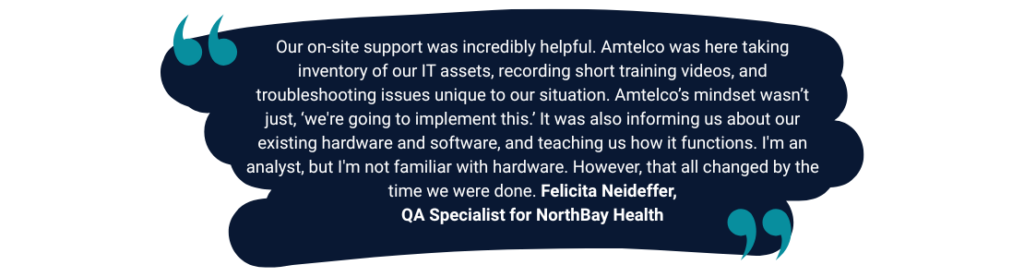
On-Site Go-Live Support
On the first days of the full launch, have your Change Champions, super users, and IT support staff physically present in the call centre. Ask them to wear bright, hi-vis vests (“Ask Me!”) to show visible, immediate support.
Phase 4: Optimize and Sustain Performance (The “Future”)
The work doesn’t end at go-live; continuous refinement is necessary.
Continuous Feedback Loop
Establish a weekly meeting with the operators to gather their feedback: What is clunky? What feature isn’t working? What data is missing? Prioritize and implement quick fixes to show the team their input is valued and that the system is theirs.
Measure and Communicate Success
Track the metrics defined in Phase 1 and publicly celebrate these wins, linking the positive outcomes directly to the switchboard’s adoption of the new technology and the resulting improvements in patient care.
Reinforce New Skills
Formalize a digital coaching program where super users continue to mentor peers. Incorporate the new system proficiency into performance reviews and career progression planning to solidify the change.
Future-Proofing
Plan for regular system updates and continuous training to ensure the DCC evolves with the hospital’s needs to avoid becoming a legacy system.
Contact Nick Evans at +61 2 5017 9925 or nevans@amtelco.com to discuss the challenges your switchboard is facing with transitioning to a DCC.