Skip to main content
Skip to footer
Skip to main content
Skip to footer


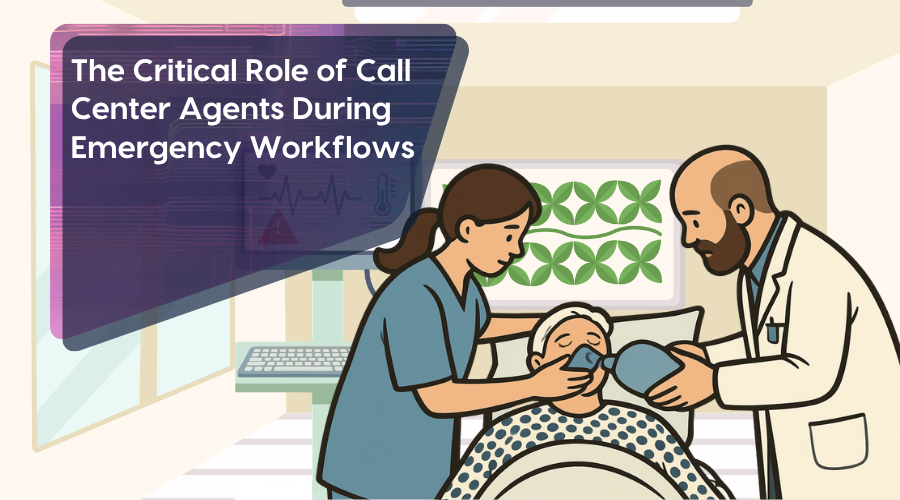
When a patient experiences a life-threatening medical crisis, such as a STEMI (ST-Elevation Myocardial Infarction) heart attack, cardiac arrest, or severe stroke, time is the single most critical factor determining survival and recovery. Medical protocol dictates strict benchmark times, such as the standard “door-to-balloon” (D2B) window of 90 minutes for opening a 100% blocked coronary artery. While public attention understandably focuses on the frontline clinical personnel (paramedics, emergency department doctors, and catheterization lab teams), an unsung alerts hub sits at the center of many critical health events: the hospital call center.
Hospital call center agents are often critical event communicators. When an alarm triggers or an emergency code call is initiated, these operators instantly synthesize incoming data, confirm locations, and dispatch response teams across the facility. Historically, this process involved manual lookup tables, complex keyboard combinations, and manual text entry for overhead paging—adding tens of seconds or even minutes to response protocols.
By upgrading legacy manual call center operations to intelligent, automated alarm notification and dispatch software, healthcare systems drastically reduce activation times, lower the cognitive burden on operators during high-stress events, and ensure seamless coordination among care teams.

In emergency medicine, delayed communication directly translates to lower survival rates and poorer long-term health outcomes. Hospital call center technology directly influences response times across several major medical emergencies:
STEMI
Guidelines established by the American College of Cardiology (ACC) and the American Heart Association (AHA) mandate a D2B time of 90 minutes or less. This measures the exact window from the moment a patient walks through the hospital door to when an interventional cardiologist inflates a balloon in the cardiac catheterization lab to restore blood flow through a completely blocked artery.
However, achieving a sub-90-minute D2B time requires synchronous activation. The moment an EKG confirms a STEMI, the call center must simultaneously alert on-call interventional cardiologists, cath lab nurses, radiology staff, and cardiac care unit (CCU) personnel. If a hospital faces a rare scenario—such as three simultaneous back-to-back STEMI activations within an hour—manual paging workflows easily become overwhelmed, risking cascading delays.
In-Hospital Cardiac Arrest (Code Blue)
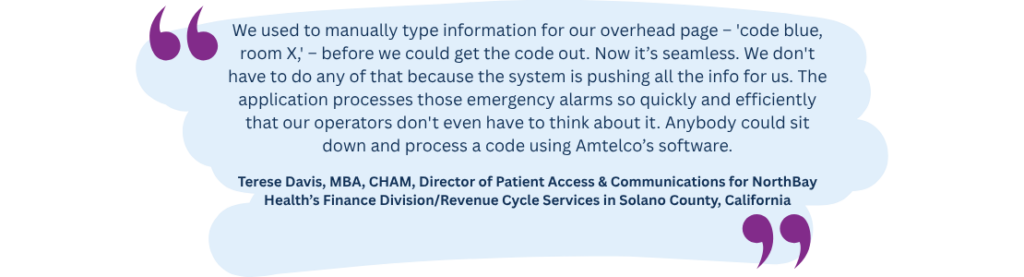
The AHA notes that survival rates drop significantly for every minute defibrillation and advanced cardiac life support (ACLS) are delayed during an in-hospital cardiac arrest. Legacy code processes rely on operators manually typing out text strings (e.g., “Code Blue, ICU Room 402”) before firing overhead announcements or paging systems. Manual typing under extreme stress creates opportunities for typographical errors and delays dispatch times.
Stroke and Trauma (Code Stroke / Code Trauma)
Intravenous tissue plasminogen activator (tPA) for ischemic stroke must be administered as quickly as possible, ideally within a 60-minute “door-to-needle” (DTN) window. Activating a stroke team requires sending vital patient history, incoming EMS transport times, and CT scan reservations to multi-departmental teams without disrupting ongoing care in other units.

Despite massive investments in updated clinical equipment, electronic health records (EHR), and advanced catheterization labs, some healthcare organizations continue to rely on legacy communication systems in their call centers. These manual processes introduce systemic vulnerabilities.
Operators handling emergency codes experience severe pressure. Under legacy systems, agents must memorize specific keystrokes, recall distinct instructions based on individual campus locations, and manually cross-reference paper or digital contact sheets to find who is on call.
Reading a complex procedure off a screen while simultaneously typing instructions increases the likelihood of missing a step, selecting the wrong department list, or misspelling a location.
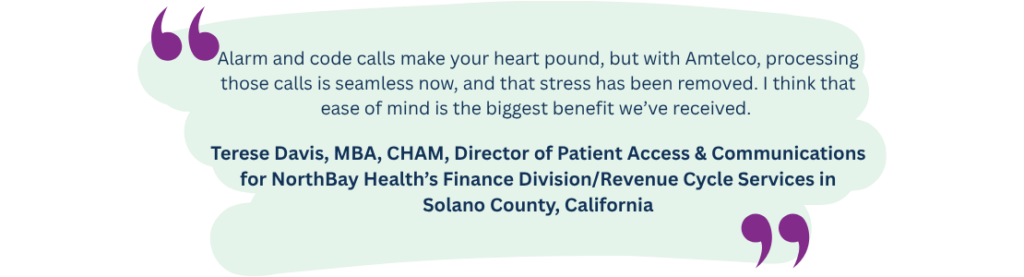
To eliminate the risks associated with manual call dispatching, healthcare organizations are adopting automated event-notification software in their call centers. By integrating the call center console directly with on-call scheduling modules and enterprise systems, hospital communication transforms into an automated pipeline:
Guided Scripting and One-Touch Templates: Instead of relying on operator memory, interoperable call center software displays dynamic, step-by-step prompts based on the specific alarm type and location. Pre-populated templates automatically pull relevant location details into the notification message.
Parallel Automated Paging: Rather than requiring an operator to manually page departments one by one, the system instantly executes redundant, multi-channel dispatches. As the call center agent begins handling the code on their console, background integrations simultaneously send pages, push notifications, and SMS alerts to the appropriate personnel (clinical response teams, on-call physicians, engineering, security, etc.).
Comprehensive Audit Trails: Every step of an emergency activation—from initial trigger time to agent interaction, message dispatch, and recipient acknowledgment—is logged automatically. This data provides granular statistics for regulatory compliance, quality control, and drill evaluations.
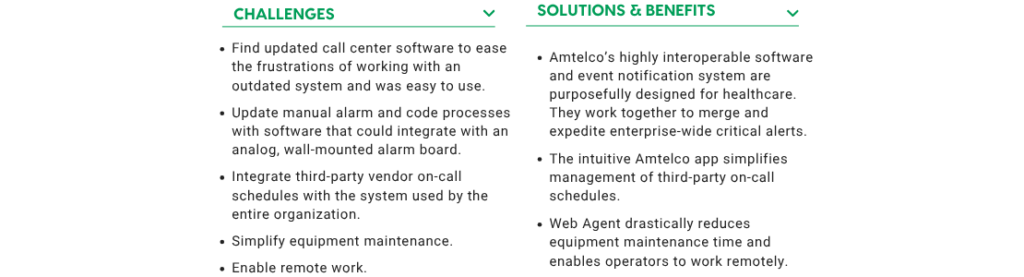
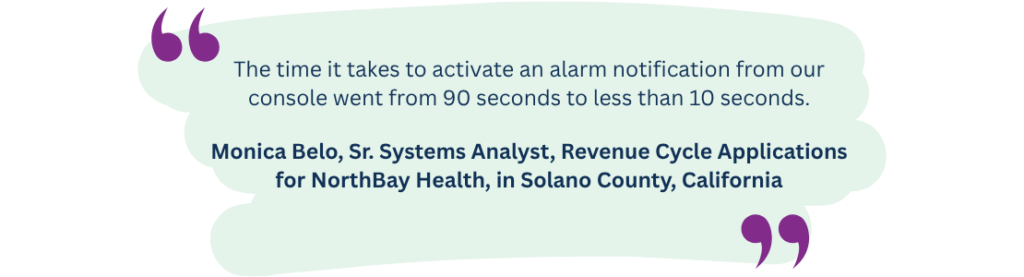
The concrete benefits of updated hospital call center software are clearly demonstrated in this Amtelco case study with NorthBay Health, a leading regional healthcare provider. NorthBay Health operated with legacy alarm boards and manual operator procedures across its system. Updating physical alarm panels presented severe logistical barriers. Operating under California’s stringent seismic safety regulations, opening physical walls to alter hardware or alarm boards meant engaging state agencies, hiring architects for formal renderings, and navigating lengthy permit approvals designed for physical structural safety.
To solve this without massive capital expenditure or regulatory delays, NorthBay Health partnered with Amtelco to deploy an advanced event notification system. Amtelco’s on-site team implemented an integration strategy that allowed the existing analog alarm board to communicate directly with the new digital software suite. This fix bypassed physical construction entirely, saving substantial time and financial capital while maintaining full regulatory compliance.
Following the implementation of guided scripting and automated dispatch workflows, NorthBay Health achieved immediate, measurable improvements across their call center and clinical teams. This incredible video from NorthBay Health demonstrates the importance of alarms in staff responsiveness during multiple back-to-back STEMI alerts. These alerts were initiated by NorthBay Health’s hospital call center operators, highlighting the important role agents play in processing life-saving workflows.
A hospital’s emergency capacity is only as fast as its communications pipeline. While clinical teams deliver the care that saves lives, it is often the hospital call center operator—supported by intelligent, automated software—who ensures those clinicians are activated without losing precious seconds.