Skip to main content
Skip to footer



Hospital systems’ call centers across the nation are the main contact point for entire health systems, operating as the primary communications hub for patient access, handling general inquiries, and triage support:
- Serves as the initial voice and routing system for patients and families attempting to reach hospital services.
- Connects callers with the specific department, primary care provider, specialist, or ancillary service best suited to their request.
- Manages scheduling, updates patient insurance information, and assists with medication refills.
- Helps direct prospective patients on where to seek treatment (e.g., deciding among walk-in care, urgent care, or emergency services).
Empowering Healthcare Communication
Amtelco has partnered with healthcare systems for decades. LouAnn Lacourse, Call Center Manager at a non-profit hospital in New Hampshire, recalls how her health system was a true pioneer in adopting advanced call center technology, saying, “We were one of the first hospitals that signed up with Amtelco. I think we were one of the first in the Northeast.”
Starting with legacy platforms like Amtelco’s EVE system, which LouAnn fondly remembers as feeling like “dot matrix back then,” the hospital has continuously updated its infrastructure and call center needs. The health system built a sophisticated communications hub that now supports 23 call center associates answering calls across multiple regional healthcare facilities.
LouAnn has experienced the evolution from paper in binders and multi-step manual dialing to automated digital workflows. She remains a steadfast champion of Amtelco’s technology. Her deep operational background—having started as a per-diem operator before stepping into management—gives her a unique perspective on the tangible value the software brings to daily hospital operations.
Transforming Emergency Response
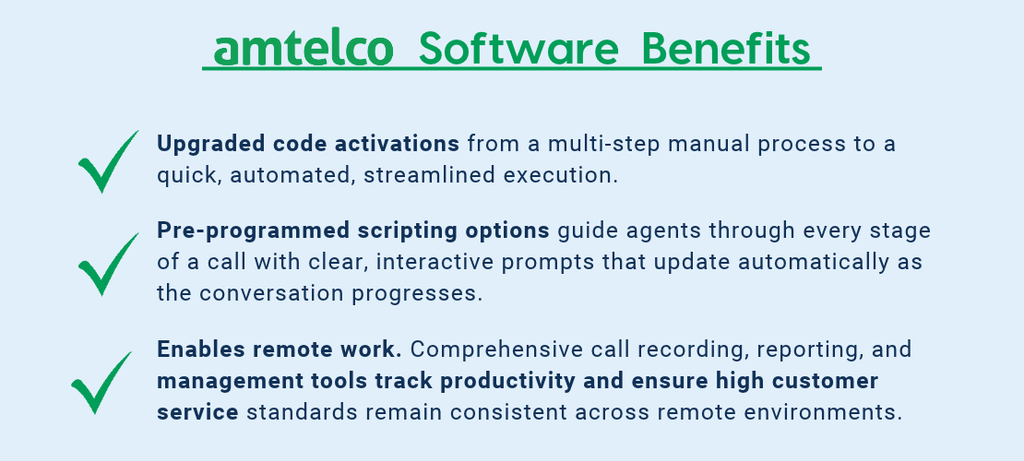
Emergency code activations, such as trauma teams responding to critical patients, demand absolute speed and flawless execution. Prior to streamlining workflows with advanced scripting and automation, activating a code team was a cumbersome, multi-step manual process. “In the past, we had 20 people on the trauma team, and we had to dial out to 20 numbers to activate that code,” says LouAnn. “Now, it’s like “push activate,” and they all go. Activating a code takes only seconds, not a minute or two. Amtelco’s system is so quick.”
“The execution of codes is my absolute favorite,” continues LouAnn. “You can either role-based page the codes, send them individually, or both.” By leveraging intelligent scripting and automated group paging protocols, call center associates can instantly dispatch notifications to pagers and mobile apps using WCTP (Wireless Communications Transfer Protocol) while simultaneously initiating overhead paging and secondary notifications. This elimination of manual dialing bottlenecks ensures that critical care teams receive life-saving alerts within seconds, directly supporting the hospital’s commitment to rapid emergency intervention.
“We have a lot of people on our trauma team, and when a Trauma 1 goes out, I tell my staff that the emergency is not yours; don’t be nervous,” explains LouAnn. “Your job is to get the people and the team to where they need to be to help that patient as quickly as possible. Seconds matter. Amtelco helped me set up the script so that we are given the questions to ask, the people to page, and we can get the job done in seconds.”
LouAnn keeps an open, communicative relationship with the directors who drive the codes (the Code Blue Committee). She regularly sends the committee members copies of the scripts and info pages that her staff use to ensure everything is up to date and correct.
Reducing Training Time
Amtelco’s call center software is designed to elevate agent performance and standardize caller interactions. Pre-programmed scripting options are based on an organization’s internal protocols to guide operators through every stage of a call. The system presents clear, interactive prompts that update automatically as the conversation progresses. This structured approach cuts down on operator error, reduces agent stress, and noticeably shortens training time for new staff.
By using advanced ACD (Automatic Call Distribution) tools and call-routing capabilities, supervisors can strategically send specific call types to new hires, allowing them to master easier calls and workflows before gradually expanding to more complex queues.
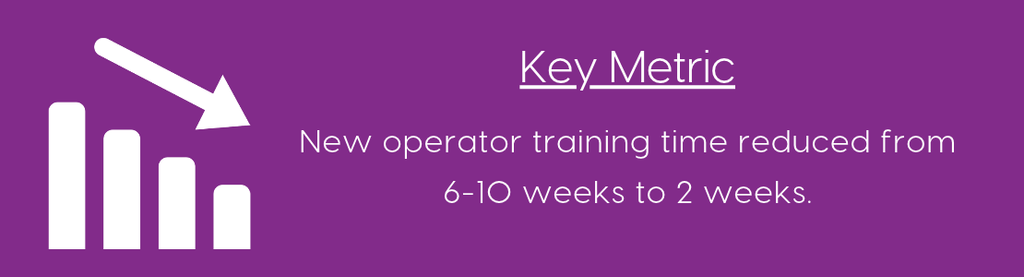
LouAnn comments, “The learning curve for new operators is lessened. It used to take six to ten weeks before I was comfortable enough to leave a new operator on their own. However, Amtelco’s software is so user-friendly that some associates can and will jump on the phones their first day to answer a call or two. They get more comfortable that way. The time it takes for an agent to be fully trained has been reduced to around two weeks.”
This dramatic reduction in training time means health systems can onboard new call center associates efficiently to maintain staffing resilience and high standards of patient communication.
Unlocking Workplace Flexibility and Staff Support
As health systems prepare to relocate their main call center to accommodate the expansion of inpatient care units, leadership is simultaneously laying the groundwork to expand remote work capabilities for their call center associates.
Remote associates can easily hop online during high-volume spikes or emergency weather events, preventing call center bottlenecks and ensuring patients receive immediate support.
Beyond helping navigate regional winter weather challenges, remote capabilities offer a critical lifeline for workforce management and staff retention. By enabling associates to log in securely from home, the hospital can accommodate team members’ preferred schedules without sacrificing coverage or penalizing top-performing staff. This flexibility ensures experienced operators remain active and engaged while maintaining a good work-life balance.
Remote work introduces greater autonomy, and maintaining team cohesion and accountability remains a top priority. By using Amtelco’s comprehensive call recording, reporting, and management tools, supervisors can track productivity and ensure high customer service standards remain consistent across remote environments. Furthermore, establishing dedicated remote communication channels keeps off-site operators connected to central operations, preserving an essential teamwork environment.
An Exceptional Partnership
A technology platform is only as strong as the company standing behind it. Whether handling hardware support during early implementations or collaborating on modern database troubleshooting, Amtelco’s US-based support team has consistently delivered peace of mind.
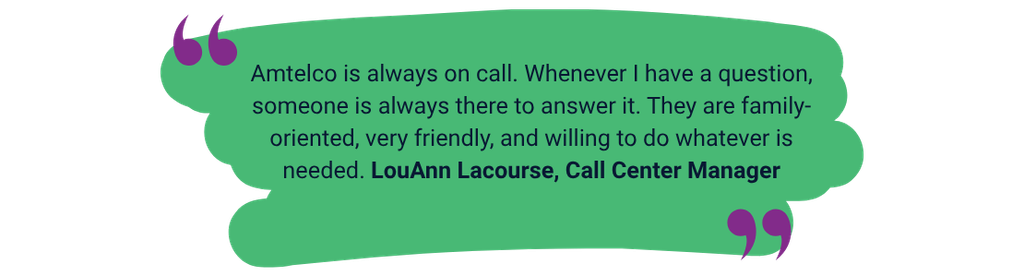
LouAnn emphasizes the reliability of Amtelco’s service and technical assistance: “Amtelco is always on call. Whenever I have a question, someone is always there to answer it. They are family-oriented, very friendly, and willing to do whatever is needed.”
She also notes the immense value of remote troubleshooting, in which Amtelco remotely diagnoses workstation and server issues to quickly resolve hiccups. Amtelco also works directly with hospital database and server administrators to collaborate to create customized solutions. This dependable partnership and shared dedication to healthcare excellence ensure health systems’ communication infrastructure stays up and running.
Through advanced call center software, streamlined code activations, and streamlined workflows, LouAnn and her team have optimized hospital communications to protect and serve patients across New Hampshire. Reflecting on her decades of experience and deep trust in the platform, LouAnn summarizes her advocacy: “Some days I have to be honest, I feel like an Amtelco salesperson because I really do love the product.”