Skip to main content
Skip to footer
Skip to main content
Skip to footer


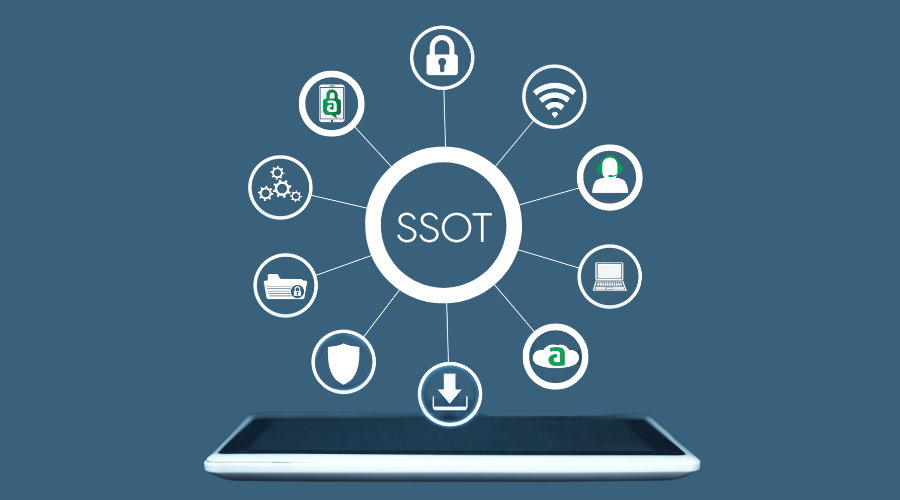
The Australian Digital Health Agency is heavily promoting HL7 FHIR (Fast Healthcare Interoperability Resources) as the standard for data exchange. As Australian hospitals move toward the 2028 goal of a fully connected, paperless health system, moving away from fragmented data toward a Single Source of Truth (SSOT) is no longer just an IT preference—it is becoming a clinical and regulatory necessity.
The shift toward a digital-first environment has made data the lifeblood of clinical operations. However, as traditional paper records are replaced by digital processes, a significant risk emerges: the creation of fragmented data silos. For Australian hospitals transitioning to Digital Coordination Centres (DCCs), implementing an SSOT architecture is no longer just a technical preference; it is a critical requirement for patient safety, operational efficiency, and regulatory compliance. An SSOT architecture ensures that every operator, clinician, and administrator sees the exact same data at the exact same time.
Breaking Down Silos for Clinical Safety
Many Australian healthcare organizations currently rely on a disconnected mix of legacy systems to manage different departments. When the switchboard, bed management, and clinical teams use disparate software, data silos are created. Manually retrieving and updating information across these silos is not only time-consuming but also introduces a high risk of human error.
[Related: Why Switchboards are Ditching Paper Processes]
With the Australian government’s recent Health Legislation Amendment (Sharing by Default), there is a legal push to ensure data like pathology and imaging are instantly available. If a switchboard is operating on a siloed system that doesn’t sync with the hospital’s core Electronic Medical Records (EMRs), they risk making coordination decisions based on outdated information, which directly conflicts with these national interoperability standards.
An SSOT ensures that every data element is edited in one primary location, meaning that whether a patient’s status is updated by a nurse on a ward or an administrator in a regional clinic, the information remains consistent and accurate across the entire network.
Integration as the Engine of Truth
To achieve this, integration engines leverage SSOT to enable several independent databases to function as a unified whole. In the context of “sharing by default” mandates, this architecture enables information to flow seamlessly between systems using modern standards such as HL7 FHIR. This reduces the likelihood of duplicate or conflicting records.
The importance of an SSOT extends beyond the EMR. For a switchboard operator transitioning into a Coordinator role in a DCC, having a single source for on-call rosters, bed availability, and patient location prevents errors that occur when different departments maintain separate spreadsheets and provides the trusted data needed to make split-second decisions about on-call rosters or patient transfers.
[Related: Data, Culture, and Governance: The Triad of Challenges for Updating Australian Hospital Coordination]
By moving away from fragmented systems and adopting an SSOT structure, Australian hospitals can bridge the gap between their legacy past and a digitally coordinated future, ensuring that every member of the healthcare team—from the head office to the rural clinic to the DCC—accesses information that is accurate, synchronized, and trusted.
Contact Nick Evans at +61 2 5017 9925 or nevans@amtelco.com to learn how Amtelco’s software acts as the integration layer, turning siloed information into an SSOT.