Skip to main content
Skip to footer
Skip to main content
Skip to footer


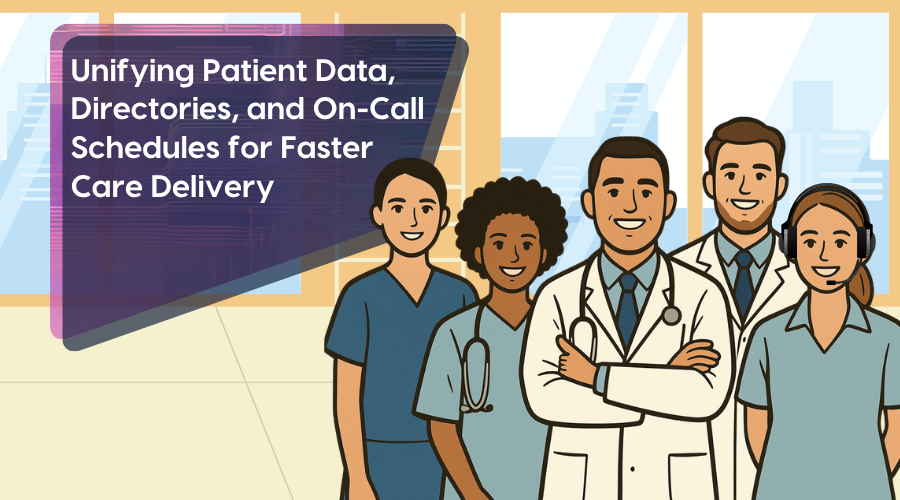
Speed and accuracy are fundamental to patient care and operational efficiency. However, clinical and call center teams frequently struggle with fragmented communication, navigating disparate systems for Electronic Health Records (EHRs), directory lookups, and physician shift schedules.
Related Case Study with State University of New York (SUNY) Upstate Medical University: Integrating with Epic’s Electronic Medical Records
By integrating EHR data and on-call schedules directly into central communications and call center platforms, healthcare organizations eliminate unnecessary system switching, reduce manual routing errors, and ensure that critical messages reach the right provider on the first attempt.
A typical U.S. healthcare organization manages between 400 and 1,000 distinct software applications. Hospital staff and call center agents navigate a web of specialized tools every day: patient charts, scheduling portals, secure messaging applications, central directories, and alarm monitors.
Related Case Study with Valley Health | Winchester Medical Center: Integrating On-Call Scheduling Software to Improve Patient Care by Monitoring Pain Pathways
Significant operational friction occurs across departments when these tools are used in isolation. Operators and clinicians waste valuable time toggling between screens and re-authenticating across multiple applications just to locate basic contact details. Furthermore, departments often manage schedules independently using static spreadsheets, paper logs, or web portals, creating discrepancies that make identifying the active on-call provider confusing and error-prone.
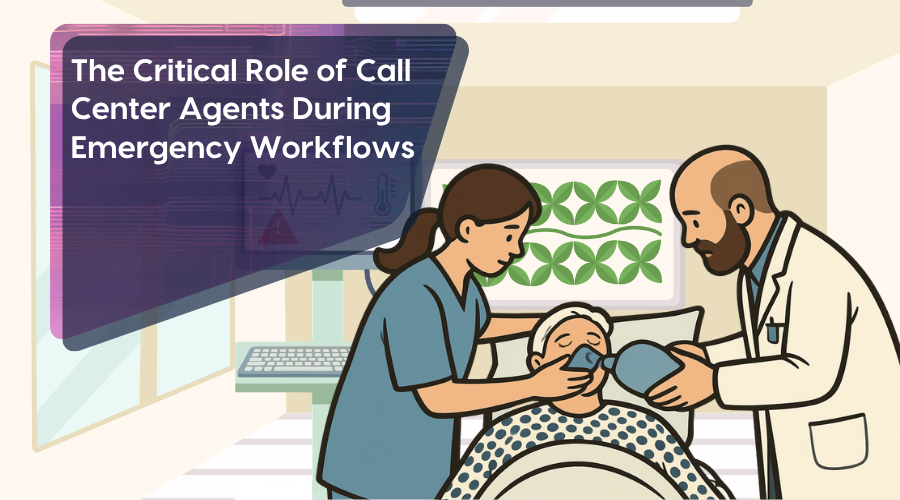
When an urgent call or alert arrives, staff are forced to manually cross-reference directories and on-call schedules to determine who to notify, introducing delay into critical, possibly life-saving workflows. These disconnected channels also prevent healthcare organizations from tracking message delivery, receipt acknowledgments, and automated escalations, leaving leadership with limited audit trails and poor operational visibility.
Related Case Study with Ephraim McDowell Health: Leveraging Directories to Improve Call Flows and Reduce Code Call Errors
These delays carry real consequences. A landmark study by CRICO Strategies analyzed more than 23,000 medical malpractice cases to reveal that communication failures were factor in over 7,000 cases (around 30 percent), resulting in $1.7 billion in total costs and nearly 2,000 preventable deaths.
The Joint Commission reports that communication breakdowns are a root cause in over 60 percent of hospital sentinel events (events resulting in death or permanent severe harm). Studies on clinical communication inefficiencies show that poor communication costs an average 500-bed hospital over $4 million per year in lost productivity and operational delays, contributing to an overall price tag of $12 billion in nationwide healthcare waste annually.
Research published in the Annals of Internal Medicine and by the American Medical Association shows that physicians and nurses spend nearly two hours on administrative tasks and EHR work for every one hour of direct patient care. Switching between non-integrated tools, managing multiple logins, and hunting down schedule information are leading contributors to cognitive overload and burnout.

Interoperable hospital call center platforms bridge the gap between EHR systems, scheduling software, and messaging channels by absorbing live data, organizing it, and pushing it directly into the daily workflows of hospital operators and clinical staff.
Related Case Study with Providence Swedish: Improving On-Call Communication Delays and Code Call Workflows with Web-Based Platforms
How Data Moves Through the Integrated Workflow
- Information via HL7 Feeds: Patient demographic and location data can flow directly from the EHR into the central communications console in real time, to automatically keep patient information updated.
- Consolidated On-Call Scheduling: On-call schedules from various departmental tools can be managed by a single, interoperable system. Updates made by departments reflect instantly across all connected communication channels.
- EHR Context: Clinicians working with EHRs can also view live on-call roster information.
- Intelligent Alert Routing: Inbound calls, patient updates, or critical notifications trigger automated routing logic that cross-references current duty status and contact preferences.
- Secure, Multi-Channel Message Delivery: Notifications are dispatched immediately to the appropriate destination with delivery tracking and automated escalation rules.
This unified flow of information delivers targeted operational benefits to every group across the enterprise. Contact center teams use a single interface that automatically displays current patient details and active on-call personnel, eliminating manual cross-referencing, shortening average call-handling times, and significantly reducing operator stress. Clinical staff receive accurate communications with full patient context on the first attempt, leading to fewer delays in consultations, admissions, and emergency responses. Finally, IT and systems integration leaders leverage standard HL7 interfaces to maximize the return on existing software investments while gaining centralized logging and robust audit trails for compliance and performance analytics.
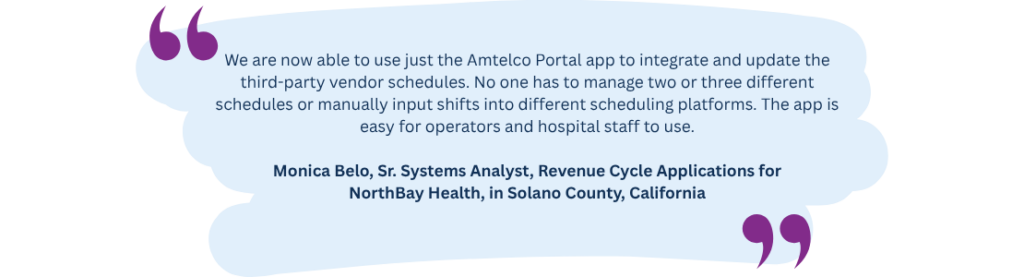
Related Case Study with NorthBay Health: Addressing Pain Points with Upgraded Call Center Software
By bringing patient data, directories, and schedules into a single cohesive ecosystem, healthcare organizations can reliably route communications using live, synchronized data. Eliminating double entry and constant app toggling supports faster responses by drastically reducing the manual steps between an inbound event and final delivery, all while maintaining full visibility over delivery tracking, acknowledgments, and escalations.