Skip to main content
Skip to footer
Skip to main content
Skip to footer


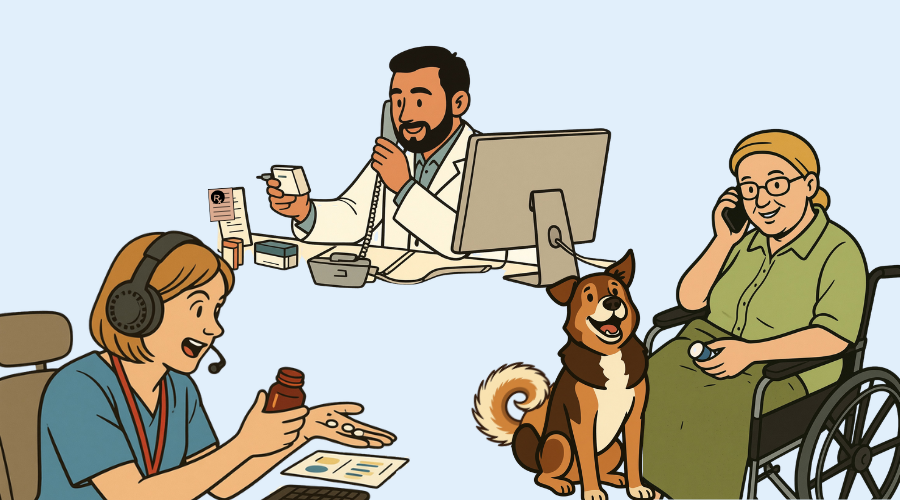
A Patient Support Program (PSP) is a specialized service typically funded by pharmaceutical companies, healthcare organizations, or third-party providers. Its core mission is to help patients gain access to prescribed medications, stick to their treatment plans (adherence), and navigate the complex healthcare ecosystem.
Because these medications can cost thousands of dollars per month and often require specialized administration (like self-injections or home infusions), patients face massive friction points after leaving the doctor’s office.
When a patient is prescribed a high-touch, complex medication (like a biologic, oncology drug, or specialized infusion), a PSP steps in to handle the hurdles that might otherwise cause them to delay or stop treatment.
A successful PSP relies heavily on a structured operating model that balances high-tech data insights with direct call center operations to deliver a seamless, personalized patient experience.
What is a PSP Call Center?
Navigating healthcare can be incredibly overwhelming for patients, especially when dealing with complex, chronic, or rare conditions. PSPs and their dedicated call centers serve as a vital safety net, helping patients manage their treatment journeys smoothly.
The PSP call center (often referred to as a “patient hub” or “reimbursement hub”) is the operational heart of the program. It isn’t just a generic customer service helpline; it is a highly specialized contact center staffed by case managers, reimbursement specialists, and often clinical professionals such as registered nurses.
These centers act as a centralized communication link connecting patients, healthcare providers (HCPs), insurance companies, and specialty pharmacies. The workflows within a PSP call center generally fall into three critical areas:
- Access and Reimbursement Support: prior authorization requirements, and navigate appeals if a claim is denied. They also enroll eligible patients in co-pay assistance or free trial programs to alleviate financial strain.
- Clinical Guidance and Education: If a drug requires a complex self-injection or has a strict scheduling routine, clinical staff within the call center provide personalized education. They walk patients through what side effects to expect, how to store the medication, and how to administer it safely.
Adherence and Continuity Care: Starting a drug is one thing; staying on it is another. PSP call centers use proactive outbound outreach—calling or messaging patients to remind them of upcoming refills, check in on how they are tolerating the therapy, and troubleshoot logistical issues such as delayed shipments from specialty pharmacies.
Call Center Software for PSPs
A PSP call center is different from a hospital switchboard, patient transfer center, or clinical scheduling line. It is a high-volume, multi-stakeholder case management hub that coordinates between the patient, HCP, insurance companies, and specialty pharmacies.
[Related Case Study: Customized Communication Software for Patient Transfer Centers]
Because agents handle everything from legal consent to financial transactions, the software requirements are incredibly rigorous.
1. Complex Multi-Channel Inbound Workflows
When a call comes in, the software cannot just treat it as a generic ticket. The routing logic is highly sophisticated.
In a PSP hub, the routing engine must instantly identify the specific drug program the caller is enrolled in, their language preference, and whether they need financial help or clinical triage, and route them to the appropriate, certified tier of agents.
2. High-Touch Core Software Capabilities
PSP call center software must support the three operational pillars mentioned earlier:
| Capability | What the Call Center Agent Does | Software Requirement |
| Benefits Verification and Prior Auth | Navigates commercial insurance gridlocks, submits prior auth forms, and tracks appeals | Integration with existing e-prior authorization (ePA) portals and other software. |
| Co-Pay and Financial Enrollment | Enrolls eligible patients into copay cards, government assistance, or free drug programs. | Integration with financial payment gateways and strict data field validation to prevent insurance fraud. |
| Clinical Triage and Adherence | Nurses conduct outbound check-ins to monitor side effects, provide patient training (injection devices), and track adherence. | Separate clinical queues with strict access controls; outbound dialer logic that respects specific patient contact preferences. |
3. Critical Technical & Compliance Safeguards
Call center software for PSPs also needs to address the unique regulatory hurdles these centers face every day:
Consent and HIPAA Management: Agents cannot speak to a patient, doctor, or insurer without verified, recorded legal consent. The call center software should provide robust screen and call recording, reporting, and seamlessly flag whether a patient has signed their enrollment and HIPAA consent forms before an agent even pulls up the record.
Adverse Event (AE) Reporting: This is a major pain point for pharma-funded centers. If a patient calls to complain about a late shipment but mentions in passing, “This drug makes me dizzy,” that is an Adverse Event. By law, the agent must document and report this to the pharma manufacturer, usually within 24 to 48 hours. The software needs “Hot Buttons” or automated tags to immediately flag, log, and export AE data for compliance teams.
CRM and Specialty Pharmacy Integrations: Unlike other call centers, PSP agents rarely work solely out of a telephony interface. They rely heavily on healthcare CRMs (like Salesforce Health Cloud) and proprietary hub platforms. The software’s CTI (Computer Telephony Integration) must be able to exchange data smoothly and in real time to keep patient records up to date.
Contact us to discuss the needs of your PSP call center. Amtelco’s software is highly interoperable and customizable, enabling specialized workflows tailored to your hub operations. Our solutions are HIPAA-compliant to meet the robust security protocols required to navigate healthcare regulatory frameworks.